 Coach Max
Your dog’s paw pads are tough, but winter throws a lot at them: rock salt, chemical de-icers, sharp ice, snow balls between the toes and dry indoor heat. A two-minute routine before and after walks keeps paws soft, clean and comfortable all season.
- Wipe or rinse paws after every winter walk to remove salt and de-icers.
- Trim the fur between the pads to prevent painful ice balls.
- Use paw balm or dog booties for protection.
- Limping, licking, bleeding or deep cracks mean it’s time to call the vet.
Why Winter Is Hard on Dog Paws
- Road salt and de-icers can burn and dry the pads. Dogs also lick them off their feet, which can upset the stomach.
- Ice balls form in the fur between the toes and pull on the skin.
- Sharp ice and frozen ground can cut pads.
- Cold plus dry indoor heat leads to cracked, rough pads.
- Antifreeze spills on driveways taste sweet and are highly poisonous if licked off paws.
Before the Walk
- Trim the paw fur so it’s level with the pads. This prevents snow from clumping between the toes.
- Keep nails short. Long nails spread the toes and make slipping on ice more likely.
- Apply paw balm (a wax-based, dog-safe product) to create a thin barrier against salt and ice.
- Or use booties. They give the best protection on salted sidewalks.
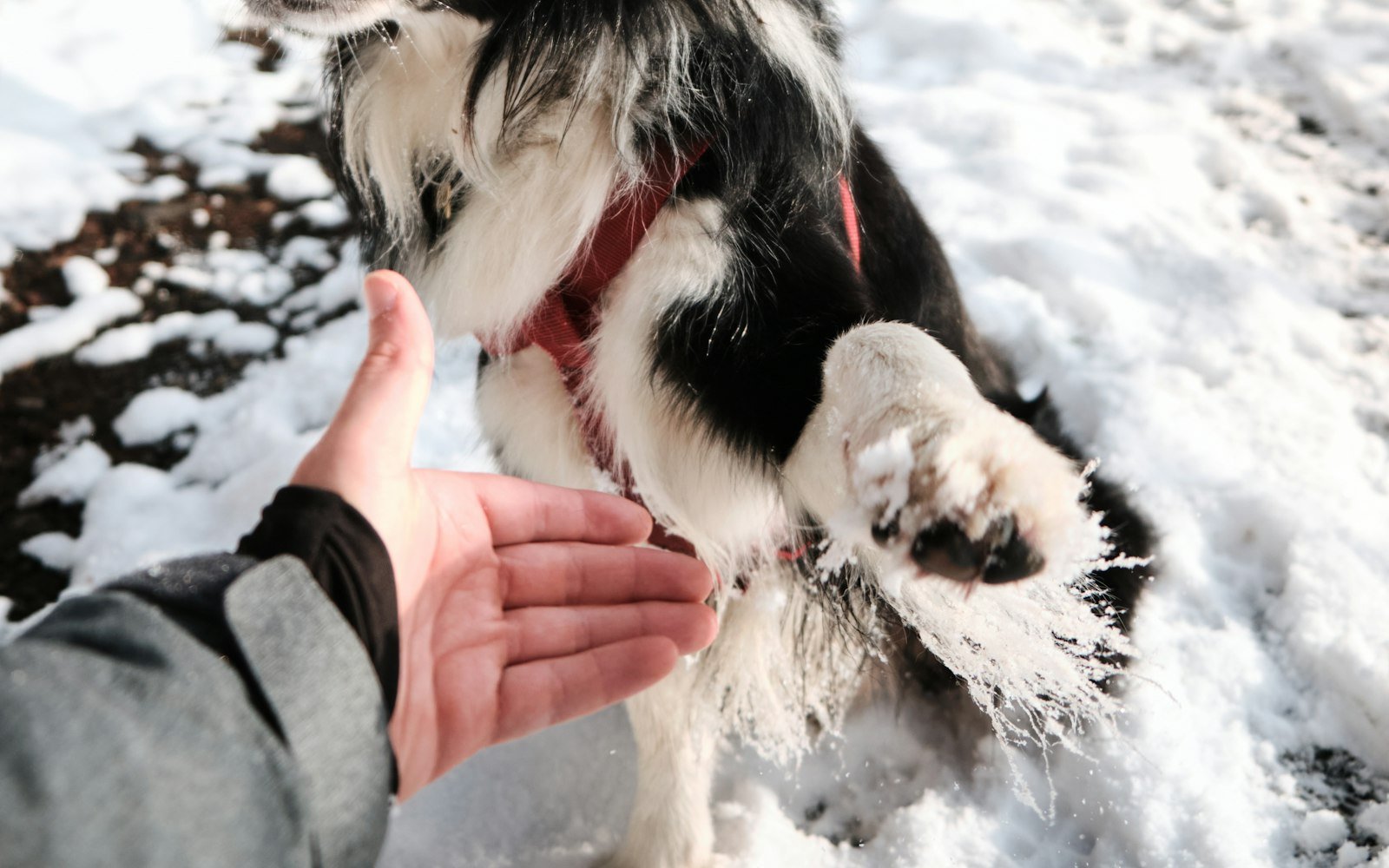
After the Walk: The 2-Minute Paw Routine
- Keep a towel and a bowl of lukewarm water by the door.
- Dip or wipe each paw to remove salt, de-icer and grit.
- Gently spread the toes and check between them for ice, cuts or redness.
- Dry each paw well, including between the toes.
- Apply a thin layer of balm if the pads look dry.
- Reward your dog with a treat. Soon they’ll offer their paws on their own.
Pet-safe paw wipes are a handy option for quick walks. Avoid human lotions — many contain ingredients you don’t want your dog licking.
How to Get Your Dog to Wear Booties
Most dogs do a funny high-stepping walk the first time. That’s normal. Put on one bootie at a time indoors, reward, and let your dog walk a few steps. Add more booties over several short sessions. Choose booties with a non-slip sole and a secure strap, and make sure they’re snug but not tight.
Pet-Safe Ice Melt at Home
At home, use an ice melt labeled pet-safe and avoid sodium chloride and calcium chloride products where possible. Sand or non-clumping litter can add grip on steps. You can’t control your neighbors’ sidewalks, so the after-walk wipe is still important.
When to See the Vet
Call your vet if you notice:
- Limping that doesn’t go away after you remove ice and warm the paw
- Deep cracks, bleeding or open sores
- Swelling, heat, pus or a bad smell (possible infection)
- Constant licking or chewing of the paws
- Pale, gray or blue skin on the paws (possible frostbite)
Paw licking isn’t always about winter — allergies and anxiety are common causes too. Shaking or trembling on walks? Read Why Is My Dog Shaking? and our cold-weather temperature chart.
Frequently Asked Questions
Is road salt bad for dogs’ paws?
Yes. It can irritate and dry the pads, and dogs that lick it off may get an upset stomach. Rinse or wipe paws after every walk.
Can I use Vaseline on my dog’s paws?
A dog-specific paw balm is a better choice. Dogs tend to lick their paws, so use products made to be safe if licked.
Do dogs need boots in the snow?
Not all dogs, but booties are very helpful in salted city areas, in extreme cold and for dogs with sensitive or injured paws.
How do I treat cracked dog paws?
Clean and dry the paw, apply a dog-safe balm and limit walks on rough or salted surfaces. If cracks are deep, bleed or don’t improve in a few days, see your vet.
The Bottom Line
Trim, protect, wipe and check. A short routine before and after each winter walk keeps salt, ice and cracks from becoming a problem, and your dog will learn to love the post-walk paw spa.